How to Care for Baby Red Eared Sliders
Red-eared sliders are popular beginner turtles as they are cute and easy to go on. Merely, many outset-fourth dimension keepers struggle to feed them a proper diet.
Many people know that turtles consume vegetables and meat. Notwithstanding, they exercise not know that the portions of vegetables over meat you should feed must change every bit they abound.
In this commodity, we hash out what cherry-red-eared sliders eat and share the best foods, feeder fish and diet.
We as well share common feeding mistakes, overfeeding and why y'all should not power feed. Finally nosotros give some tips on why a blood-red-eared slider diet is different for a baby than adult, as well every bit how to feed them…
Table of Contents
- What Do Ruby-Eared Sliders Swallow?
- Red-Eared Slider Diet
- Baby Reddish-Eared Feeding Schedule
- Adult Red-Eared Slider Turtle Feeding Schedule
- Blood-red-Eared Slider Food
- What Vegetables Tin Ruby-Ear Turtles Consume?
- What Fruit Tin can Carmine-Ears Eat?
- Common Feeding Mistakes
- Foods They Cannot Swallow
- Summary
What Do Cherry-Eared Sliders Eat?
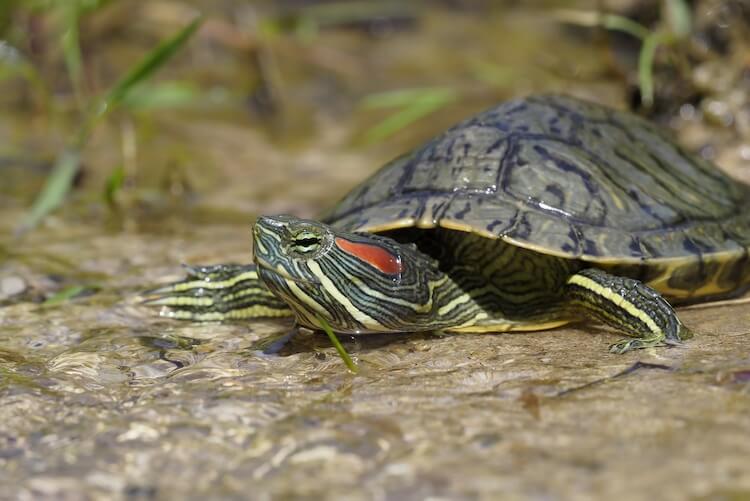
Red-eared slider turtles are omnivores, so they eat both plants and animals.
Adults mostly swallow aquatic plants such equally elodea, duckweed, water lettuce and water ferns. Adults eat so many plants they are considered herbivorous. They will only eat meat if it is readily available and there are no plants nearby. Sometimes adults will eat pocket-sized fish, earthworms, redworms, insects, snails, slugs, tadpoles and frogs.
Baby red-eared sliders eat much more meat than adults. Meat gives younger species the extra protein that is needed to assistance them grow and develop their shell. Babies enjoy invertebrates, very small feeder fish (eastward.g. minnows) and worms.
As they age this species does not need as much protein.
Too much poly peptide in adults can cause an issue known as shell pyramiding, which is when the beat becomes more triangular in shape.
Red-eared sliders chase by either sitting motionless, waiting for a fish to swim by and then snatching it, or by chasing and snapping up any bugs that land in the water. Adults will also swim along the bottom of ponds or lakes and swallow aquatic plants or algae.
Hunting and foraging for food uses up a lot of free energy, so they normally eat multiple times a solar day.
Turtles in the wild will eat whenever they can. Still, pet sliders should only exist fed every ii to iii days because they practise not accept to hunt.
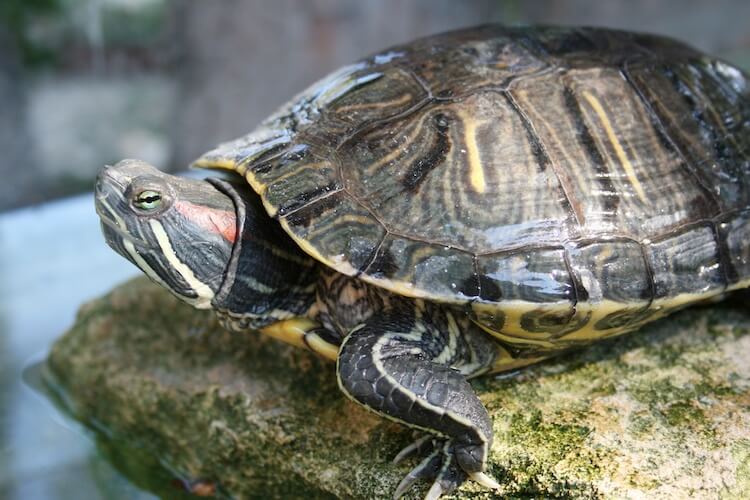
Red-Eared Slider Diet
Feeding reddish-eared sliders a balanced diet is vital for their health.
Many turtles will terminate eating out of boredom if they are fed the same diet. Providing a variety of foods in their nutrition is key to keeping a healthy appetite.
Adult red-eared sliders tin can be fed:
- Night leafy greens: romaine lettuce, kale, dandelion greens, turnip greens, mustard greens, or swiss chard.
- Vegetables: bell pepper or carrots.
- Feeder fish: goldfish, guppies or minnows.
- Insects, earthworms, slugs, snails or tadpoles.
Feeder fish are practiced enrichment for turtles as they will have to hunt it down to grab it, but they can also incorporate parasites. If you decide to feed feeder fish then buy them from a local pet store. You should never feed wild-caught casualty.
In addition to a healthy nutrition, your turtle will also demand a calcium supplement.
A powdered calcium supplement that as well contains vitamin D3 is the best. This calcium supplement will help foreclose diseases and trounce deformities. Some other choice is to throw in a cuttlebone in one case or twice a week.
It is important to know that a red-eared slider's diet changes as they age. Baby red-eared sliders need a nutrition that is higher in meat and protein. Babies should be offered some vegetables, but the majority of their diet should be carnivorous.
As your red-eared slider ages y'all can begin offering less feeder fish or insects and replace it with a variety of vegetables or aquatic plants.
Babe Crimson-Eared Feeding Schedule
Babe red-ears need to exist fed much more frequently than adults. They also need a diet high in protein. Babies should exist fed every mean solar day as they need a tremendous amount of free energy to grow at the proper rate.
Make sure you lot offer a red-eared slider diet that consists of:
- Dark Leafy Greens
- Vegetables
- Aquatic Plants
- Feeder Fish
- Feeder Insects
- Worms
- Commercial Turtle Pellets
An equal mix of protein-rich food items, nighttime leafy greens, and vegetables is ideal for a infant scarlet-eared slider.
Their diet should be 30% plant based and 70% meat.
Any vegetables y'all feed should first be boiled and chopped into pieces pocket-sized enough to fit into the turtle's mouth. Allow your turtle have a 15 minute feeding session. Later on the feeding session, only remove annihilation that hasn't been eaten to keep the water clean.
Use a feeding schedule to track what you are feeding in the event that your turtle becomes sick. You can observe a skilful feeding schedule beneath:
| Day | Food |
|---|---|
| Monday | 3-4 small feeder fish, Pocket-size handful of mustard greens, Pinch of turtle pellets. |
| Tuesday | 3-iv earthworms, Pocket-size handful of kale, Half of a chopped carrot, Calcium supplement. |
| Wednesday | 2 redworms, iii-4 crickets or mealworms, Pocket-size handful of babe spinach, One-half a chopped bell pepper. |
| Th | 3-4 small feeder fish, Modest handful of kale, 2 minor worms. |
| Friday | 3-four large worms, 3-4 crickets/mealworms, Pocket-size handful of spinach, 1-2 blueberries. |
| Sat | Turtle food (follow feeding instructions on container), 2-3 insects, Small handful of swiss chard. |
| Dominicus | 5-7 crickets/mealworms, 1 earthworm, Half a chopped bong pepper, 1-two turnip greenish leaves. |
Adult Cerise-Eared Slider Turtle Feeding Schedule
Adults should be fed a hearty amount of food once every 2 days.
A big handful of leafy greens, a pinch of turtle pellets, and a couple worms or insects should be plenty. Adults eat a lot less meat, so make sure you lot offer plenty of night leafy greens, vegetables, and aquatic plants.
Foods rich in protein, such equally fish and invertebrates, should merely be offered once a week.
To prepare vegetables for feeding, y'all should first eddy them until they are soft plenty to be hands pierced by a fork. This will help remove any leaner or bugs and will also soften it to make it easier for your turtle to eat.
Their food can be shredded and offered all at once. Y'all should exist certain to remove any food that does not become eaten after 15 minutes to ensure that your water stays clean.
A varied diet will keep your turtle healthy and volition make sure they don't get bored and end eating.
| Twenty-four hours | Food |
|---|---|
| Monday | Big scattering of kale, One chopped carrot, One chopped red bong pepper, Calcium supplement. |
| Wednesday | Large handful of kale, 2 earthworms, Ii minnows, Pinch of fish food pellets. |
| Friday | Large handful of kale, 2-3 aquatic ferns, 1-2 blueberries, Pinch of commercial turtle food, Calcium supplement. |
| Sunday | Large handful of kale, One chopped carrot, Small-scale handful of chopped swiss chard. |
Nearly keepers choose staple foods that they rotate every calendar week. For example, you can choose kale as a staple green for one week, and and then swap between supplementing with bong pepper, carrots, earthworms, a couple of minnows and turtle pellets.
Ruby-Eared Slider Food
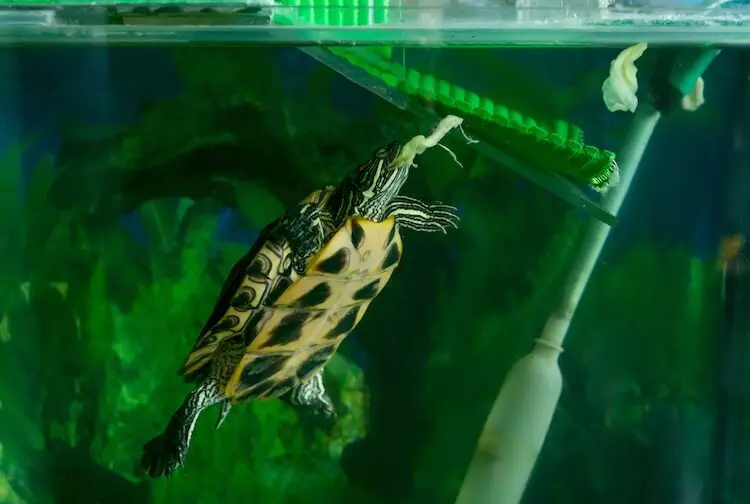
Red-eared sliders are omnivorous then they can eat both plants and animals.
- A baby ruby-red-eared slider's nutrition should be about 70% meat and thirty% establish.
- Adults should eat a diet of 50% meat and 50% plant.
An adult red-eared slider'south diet consists of so much establish matter that they are considered primarily herbivorous. This makes feeding red-eared sliders a varied, enriching diet unproblematic.
The plant portion of the diet should largely consist of vegetables and aquatic plants.
For any age slider, it is a practiced idea to stock their tank with aquatic plants that they can munch on if they are hungry after feeding, maybe even add a few freshwater fish or shrimp as well.
The fauna portion of the diet should exist invertebrates, worms, or commercial fish food. Feeder fish are expert for making your turtle exercise, but they are often loftier in fat and can carry bacteria or parasites.
Below is a complete list of foods safe for crimson-eared sliders to eat:
- Crickets
- Mealworms
- Minnows
- Tadpoles
- Frogs
- Earthworms
- Redworms
- Feeder goldfish
- Waxworms
- Aquatic snails
- Bloodworms
- Daphnia
- Shrimp
- Water ferns
- Duckweed
- Elodea
- Romaine lettuce (in modest amounts)
- Kale
- Mustard greens
- Turnip greens
- Swiss chard
- Bell pepper
- Carrots
- Carrot tops
- Zucchini
- Cucumber
- Squash
- Corn
- Okra
- Celery
- Green beans
- Cactus
- Commercial fish food
- Commercial turtle food
What Vegetables Can Ruby-red-Ear Turtles Eat?
Vegetables are an important part of a crimson-eared slider's diet. Every bit adults they consume a lot of plants so they get bored of a repetitive diet. Offering a diversity of vegetables keeps your turtle interested in eating. Here is our favorite list of vegetables you tin safely feed carmine-eared sliders:
- Bell peppers
- Carrots
- Cucumbers
- Zucchini
- Celery
- Squash
- Dark-green beans
- Corn
- Okra
- Cactus
There are some vegetables yous should avoid such every bit broccoli, peas, cabbage, and brussels sprouts equally they can all crusade gout.
What Fruit Can Cherry-red-Ears Consume?
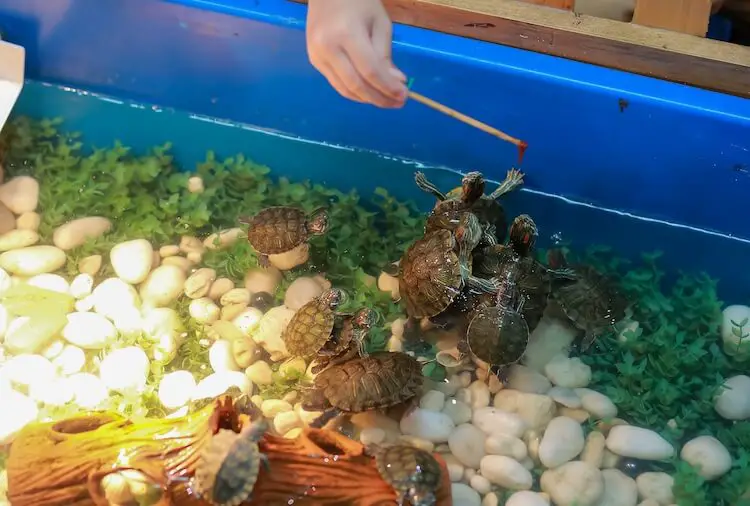
Red-eared or xanthous-bellied sliders should non be fed fruit equally a major part of their diet, but it is fine to feed fruit occasionally as a care for. Wild sliders do not normally consume fruit, so their bodies are not capable of digesting the high amount of sugar information technology contains.
Feeding cherry-red-eared sliders besides much fruit tin can cause diarrhea.
They should be offered just one or two pieces a week. Here is a list of fruits that can be fed equally a care for:
- Watermelon
- Strawberries
- Bananas
- Pears
- Mangos
- Grapes
- Tomatoes
- Apples
- Blueberries
- Blackberries
- Raspberries
- Plums
- Star fruit
- Cantaloupe
- Kiwi
Common Feeding Mistakes
Turtles and many other animals tend to movement slower subsequently eating, then regurgitating food in order to escape more than chop-chop is a common tactic.
Reddish-eared sliders may regurgitate their food if they are handled too soon after eating. For this reason, yous should expect five hours after feeding before treatment. This will give your turtle time to digest its nutrient.
Five hours should be enough so that your turtle will no longer feel vulnerable.
Ruby-red-eared sliders can likewise be prone to overeating.
If your turtle weighs more than than 6 pounds, it is probably eating as well much. Other signs of obesity include sluggishness, bloating, or shell disfigurements. Obesity causes many health problems, including fatty liver illness, centre issues, diabetes, and arthritis.
You should too never power feed a slider. Power feeding tin can cause a host of health issues and obesity. Power feeding is purposeful overfeeding normally washed by irresponsible breeders so that they tin can sell or brood their turtles as quickly equally possible.
Many first-time keepers call back that yous should movement your turtle to another enclosure to feed them.
The idea is that your turtle will not associate your mitt reaching into the tank with feeding, merely this is a myth. It does have the benefit of keeping the main tank'due south water cleaner, but information technology is easy to remove whatsoever uneaten food and employ a tank filter.
Moving a turtle to a separate enclosure to feed them causes unnecessary stress and should exist avoided whenever possible.
Foods They Cannot Eat
The diet for a scarlet-eared slider should be varied, however there are some foods that should be avoided.
One food y'all should avoid is any member of the Brassica family unit. This includes broccoli, cabbage, brussel sprouts, and bok-choi. In excess, these foods can cause kidney problems and interfere with calcium absorption.
You lot should also avert foods like radishes (they incorporate goitrogens), soybeans, avocado, dairy, whatever foods high in fat and any human nutrient. All of these foods tin can make your pet turtle sick with diarrhea.
Here is our complete listing of foods you should avert feeding a slider turtle:
- Broccoli
- Cabbage
- Brussel
- Bok-choi
- Radishes
- Soybeans
- Avocado
- Dairy
- Food high in fatty
- Homo food
- Wild caught prey
Summary
Red-eared slider turtles are omnivores, so they volition eat both plant and animal matter. Withal, every bit they age, they need less protein.
Adults should be fed a diet of 30% meat or protein and 70% establish thing, and babies should be fed a 50/50 diet of plants and meat.
Good plants to feed cherry-eared sliders are dark leafy greens, aquatic plants, and vegetables. Feeder fish, invertebrates, and commercial turtle pellets are good sources of protein.
Make certain your turtle is as well getting a calcium supplement at least in one case a week and is not being handled after feeding.
Let us know what your turtle eats in the comments below.
Source: https://www.everythingreptiles.com/red-eared-slider-diet/
0 Response to "How to Care for Baby Red Eared Sliders"
Post a Comment